Custom Sock Manufacturing Guide for First-Time Buyers
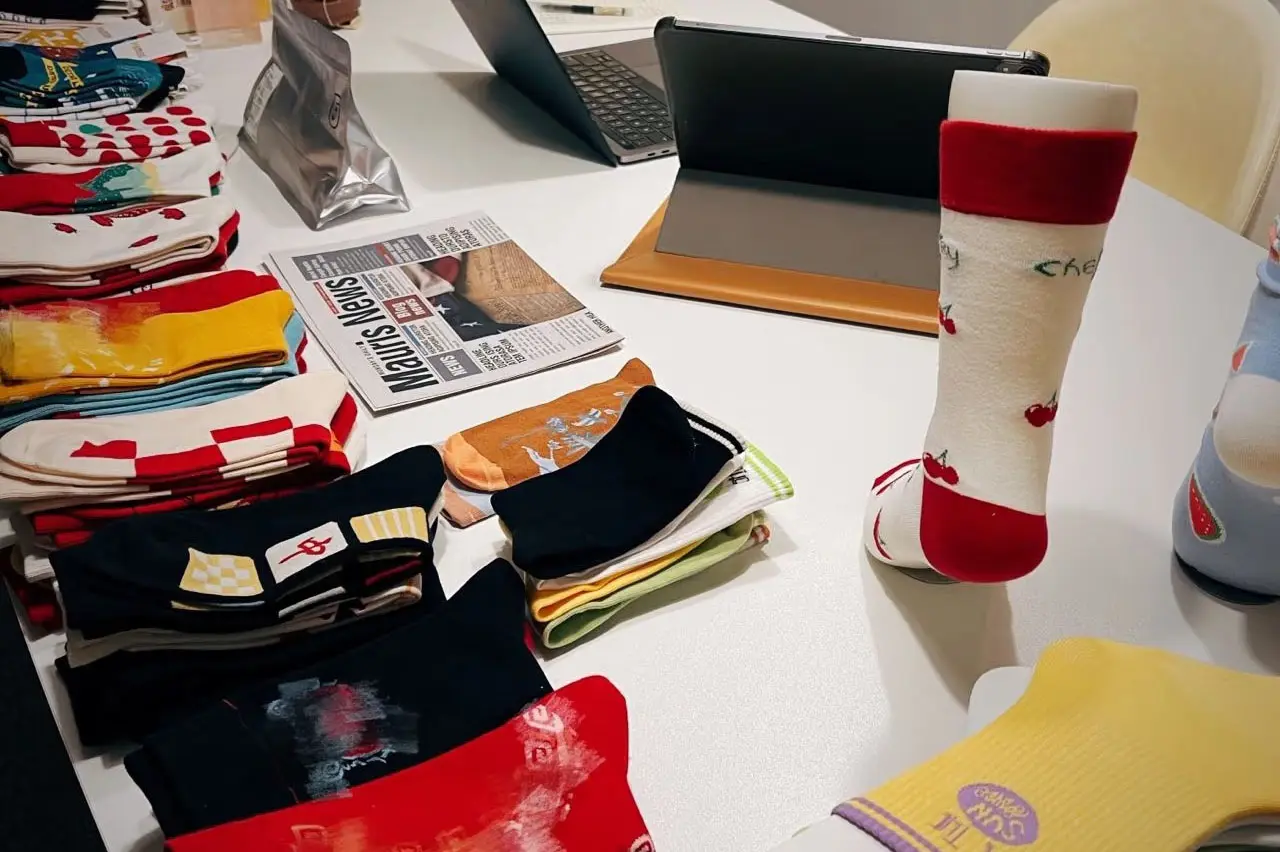
Ordering custom socks for the first time can feel simple at the beginning. You send a logo, ask for a price, and wait for a sample.
In real production, a good sock order needs more details than that. The sock type, material, logo method, size range, artwork, packaging and delivery plan all affect the final result.
This guide explains what new buyers should prepare before contacting a sock factory. It is written for brands, companies, teams, schools and retailers who want a clearer custom sock production process.
Start With the Use of the Socks
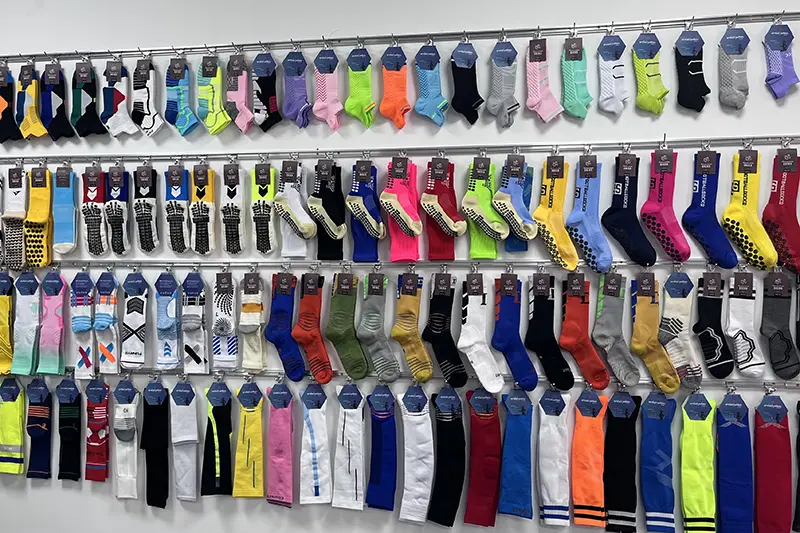
Before choosing material or price, confirm how the socks will be used.
A corporate gift sock does not need the same structure as a sports sock. A retail sock collection needs more packaging and size planning. Grip socks, compression socks and team socks also need more technical checks before sampling.
Common custom sock projects include:
- Custom logo socks for companies and brands
- Custom sports socks for teams and clubs
- Custom dress socks for business gifts
- Custom grip socks for yoga, Pilates and fitness studios
- Custom compression socks for travel, work or sports use
- Custom Christmas socks for holiday promotions
- Custom retail socks for private label brands
When the use is clear, the factory can suggest a more suitable sock height, yarn blend, thickness, logo position and packaging method.
Choose a Sock Type That Fits the Project
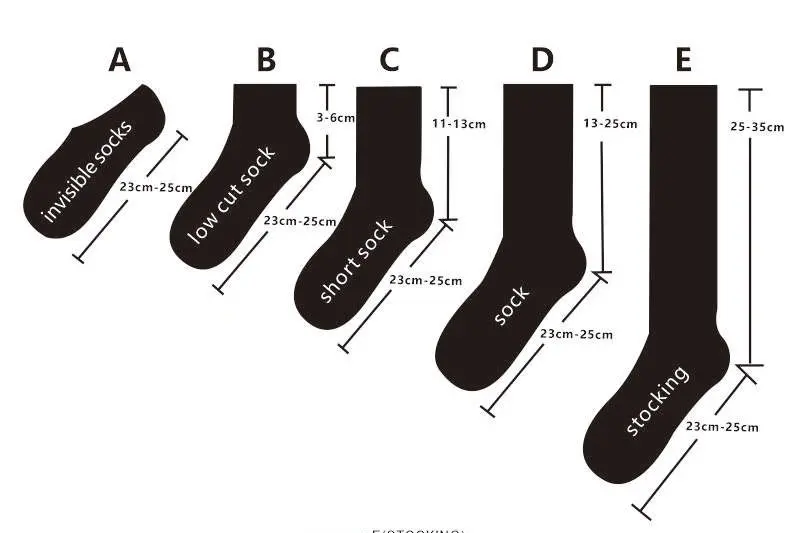
Sock type affects comfort, appearance, cost and production difficulty.
For a first order, it is usually better to start with a practical style instead of making the design too complicated.
Crew socks are a common choice for logo socks, team socks, school socks, company gifts and retail collections.
Ankle socks are often used for sports, fitness, summer products and casual wear.
No-show socks work with sneakers and low-cut shoes, but heel grip and fit need more attention.
Dress socks are suitable for office wear, business gifts and private label collections.
Sports socks need better stretch, breathability and durability.
Grip socks need silicone on the sole, so the grip pattern and sock fit should be checked together.
Compression socks require careful size and stretch planning. They are not just regular socks made tighter.
A clear sock type helps the factory choose the right machine, material and production method.
Pick a Suitable Material Blend
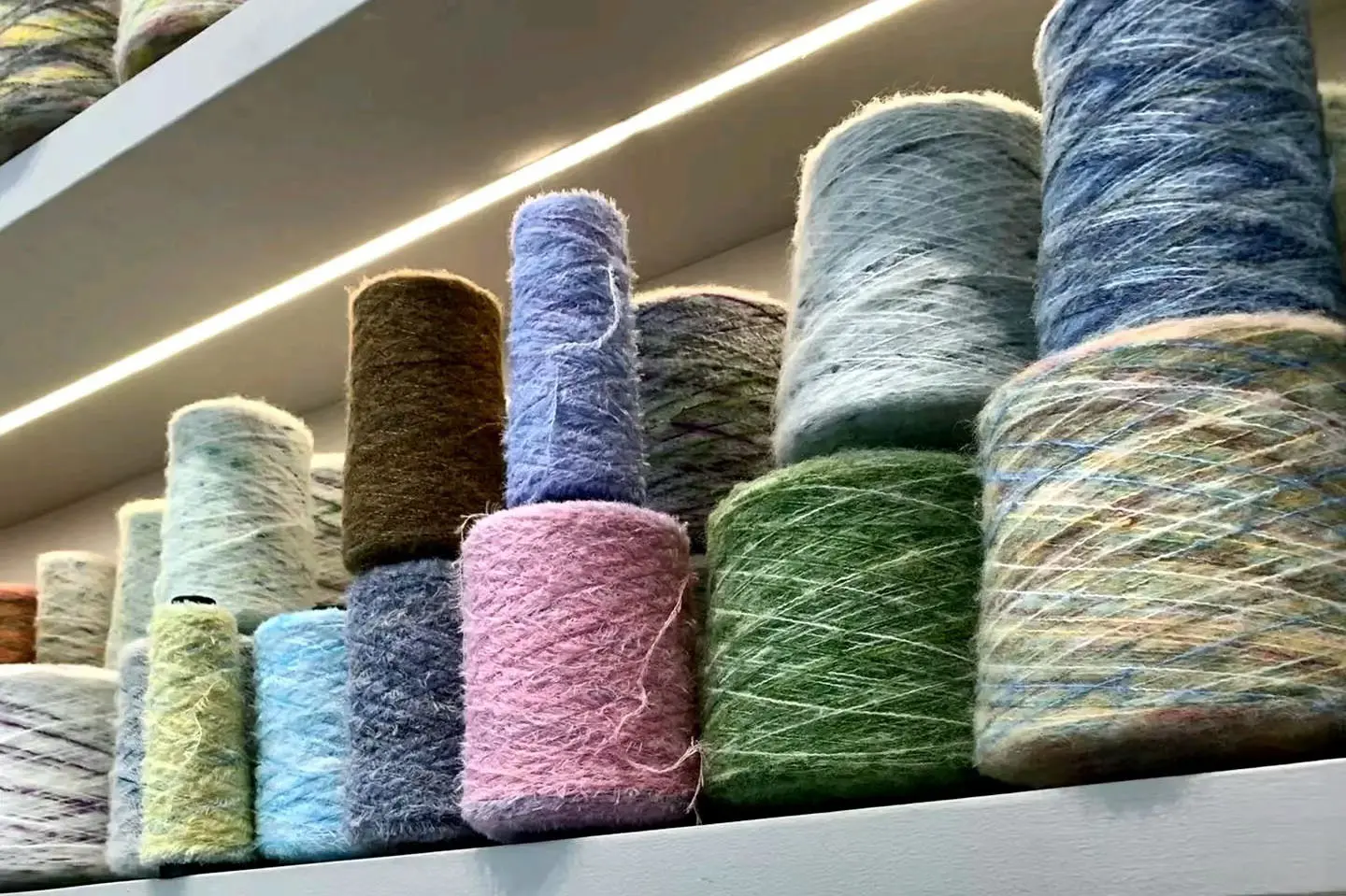
Most custom socks are made with blended yarns, not one single material. The material affects softness, stretch, thickness, durability and price.
Cotton is comfortable and works well for casual socks, dress socks and daily wear socks.
Combed cotton feels smoother and is often used when buyers want a better hand feel.
Polyester is durable and quick-drying, so it is common in sports socks and printed socks.
Nylon has good strength and stretch. It is often used in sports socks, compression socks and performance socks.
Spandex or elastane is usually added in a small amount to improve stretch and fit.
Bamboo fiber is soft and suitable for comfort-focused socks.
Wool blends are better for winter socks, warm socks and outdoor use.
There is no one best material for every order. The right choice depends on the sock use, budget, thickness and wearing season.
Prepare Artwork Before Sampling
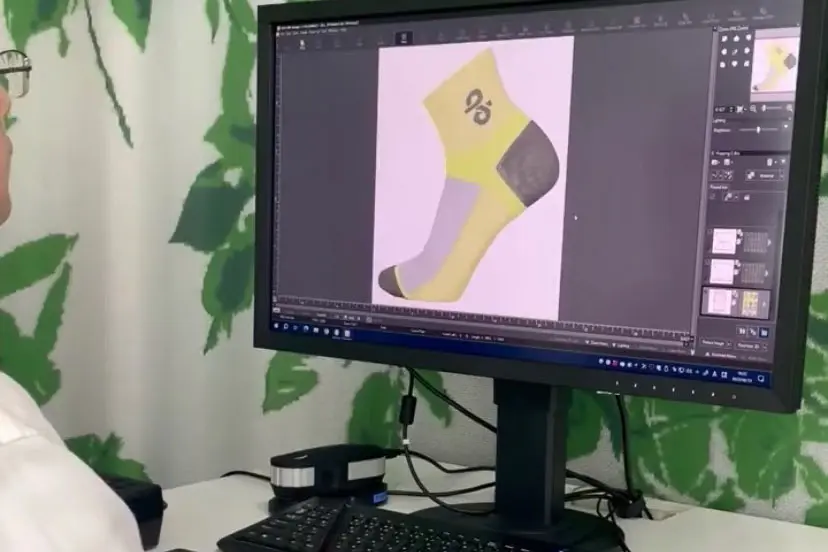
Clean artwork saves time during sampling.
For knitted socks, simple artwork usually works better than very detailed designs. Small text, thin lines, gradients and shadows may look good on a screen, but they may not show clearly after knitting.
Socks also stretch when worn, so the logo should be planned with the sock structure in mind.
Before asking for a sample, prepare:
- Logo file in AI, PDF, SVG or high-resolution PNG
- Brand color reference or Pantone number
- Sock style reference
- Logo position idea
- Pattern or text requirements
- Packaging design, if needed
Vector artwork is the best starting point for knitted logo socks. If the logo is too detailed, the factory may suggest simplifying the design or using another logo method.
Choose the Right Logo Method
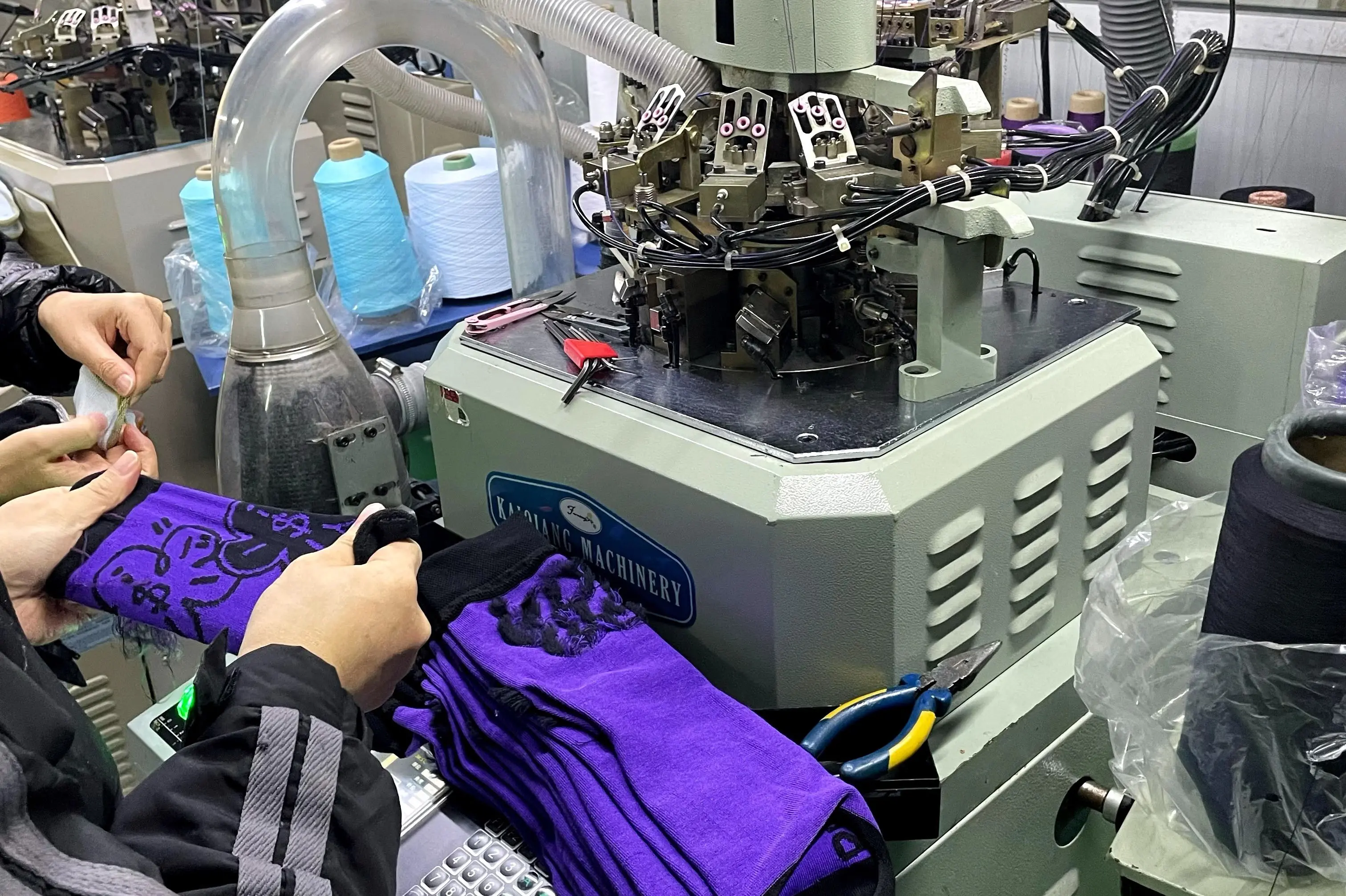
The logo method should match the design, sock type and wearing comfort.
Jacquard knitting means the logo or pattern is knitted into the sock. It is durable and widely used for logo socks, team socks, Christmas socks and retail socks.
Embroidery is suitable for small logos or premium details. It gives a raised texture, but it may not be comfortable on every sock area.
Printing is better for detailed artwork, gradients, photo-style designs or full-color patterns.
Silicone grip logos are used on grip socks. The logo or pattern can be placed on the sole as part of the anti-slip design.
For many first-time buyers, jacquard knitting is the most practical option because it is durable and suitable for bulk production.
Confirm Size and Fit Early
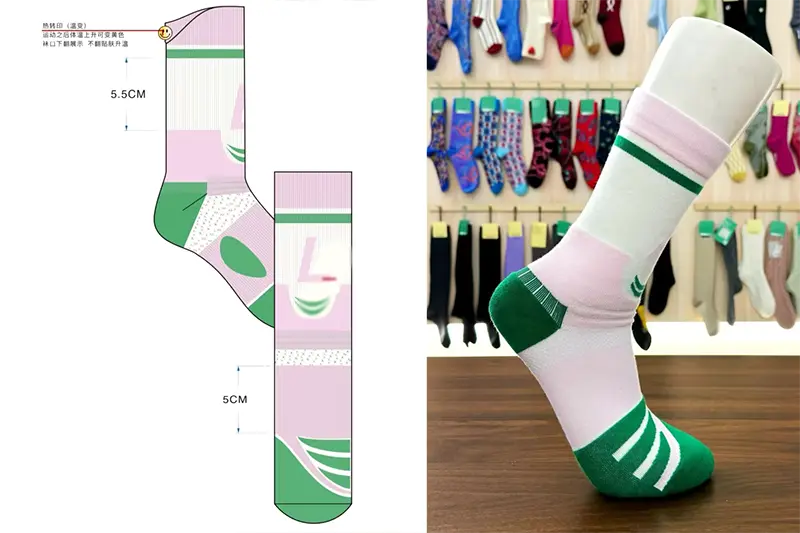
A sock sample should not only look good when placed flat. It should also fit well when worn.
Size planning depends on the target users. A company gift order may use one adult size. A sports team may need men’s, women’s and youth sizes. A retail brand may need several size groups with clear labels.
Common size options include:
- Adult one size
- Men’s size
- Women’s size
- Kids’ size
- Youth size
- Multiple retail size ranges
- Team size mix
For sports socks, compression socks and school socks, size planning is especially important. Cuff hold, calf width, foot length, heel position and stretch can all affect comfort.
Understand What Affects MOQ and Price
MOQ means minimum order quantity. It can change depending on sock type, yarn color, logo method, size range and packaging.
A simple logo sock usually has a lower MOQ than a sock with special yarns, many colors, multiple sizes or custom retail packaging.
Main price factors include:
- Sock type
- Material blend
- Sock height
- Thickness
- Number of colors
- Logo method
- Quantity
- Size range
- Packaging
- Delivery method
When asking for a quotation, send the basic details together. This helps the factory give a more accurate price instead of a rough estimate.
Make a Sample Before Bulk Production
Sampling is important for new buyers. It turns the design into a real sock and shows whether the idea works in production.
When checking the sample, look at:
- Logo clarity
- Color match
- Sock thickness
- Stretch and recovery
- Cuff comfort
- Heel and toe fit
- Pattern position
- Packaging size
If something needs to be changed, it should be adjusted during the sample stage. Once bulk production starts, changes become slower and more expensive.
Set the Bulk Production Standard
After the sample is approved, it should become the standard for bulk production.
Sock production may include yarn preparation, knitting, toe linking, boarding, trimming, pairing, labeling, packing and carton inspection.
Important quality points include:
- Correct yarn colors
- Stable logo position
- Consistent size
- Clean toe linking
- No obvious loose threads
- Good pair matching
- Correct labels and packaging
- Accurate carton marks
A reliable factory should check quality during production, not only after all socks are finished.
Plan Packaging Before Production
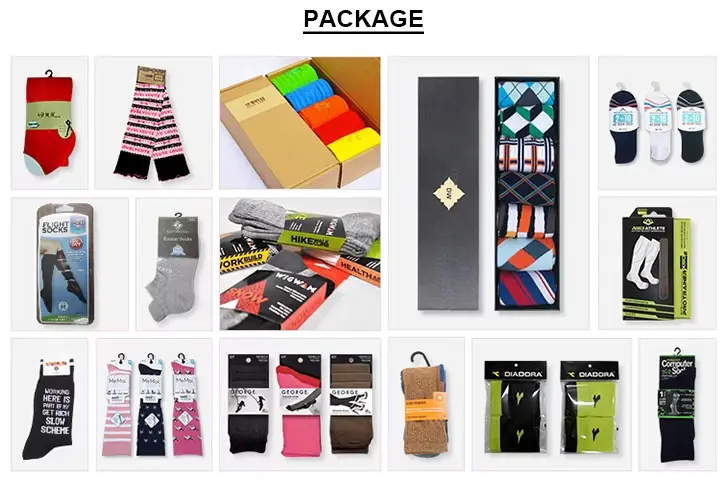
Packaging should not be left until the last minute.
Simple packaging may be enough for company gifts or event orders. Retail socks usually need more detailed packaging, such as labels, hang tags, barcodes or custom boxes.
Common packaging options include:
- OPP bag
- Paper band
- Hang tag
- Header card
- Custom label
- Custom box
- Gift packaging
- Barcode sticker
- Size sticker
- Carton label
If the socks will be sold in stores or online, packaging size, barcode placement and carton information should be confirmed early.
What to Send to a Sock Factory
A clear project brief helps the factory reply faster and quote more accurately.
You can send:
- Sock type
- Quantity
- Logo or artwork
- Sock height
- Material idea
- Size range
- Color reference
- Packaging request
- Delivery country
- Target delivery date
You do not need to know every technical detail before contacting the factory. But the more basic information you provide, the easier it is for the factory to suggest a practical production direction.
Common Mistakes New Buyers Should Avoid
Many custom sock problems start before production.
Common mistakes include:
- Asking for a price without quantity
- Sending unclear artwork
- Using very small text on knitted socks
- Choosing too many colors for a simple order
- Ignoring sock stretch
- Forgetting size range
- Confirming packaging too late
- Skipping sample review
- Leaving too little time for production and shipping
A custom sock order is easier to manage when each detail is confirmed step by step.
Conclusion
Custom sock manufacturing is easier when the project is clear from the beginning.
Before placing a bulk order, new buyers should confirm the sock use, sock type, material, logo method, size range, quantity and packaging. A sample is also important because it helps check the design, color, fit and production details before mass production.
SocksWise works with brands, companies, teams and retailers on custom logo socks, sports socks, dress socks, grip socks, compression socks and promotional socks.
Send your logo, sock idea, quantity, size range and packaging needs. We can review the details and suggest a practical sample direction before production.
FAQ
Send your logo, sock idea, quantity, size range and packaging needs. We can review the details and suggest a practical sample direction before production.
Contact SocksWise